Beyond Advertising
The Rise of Rural Gamification
23rd June, 2026
5 minutes read
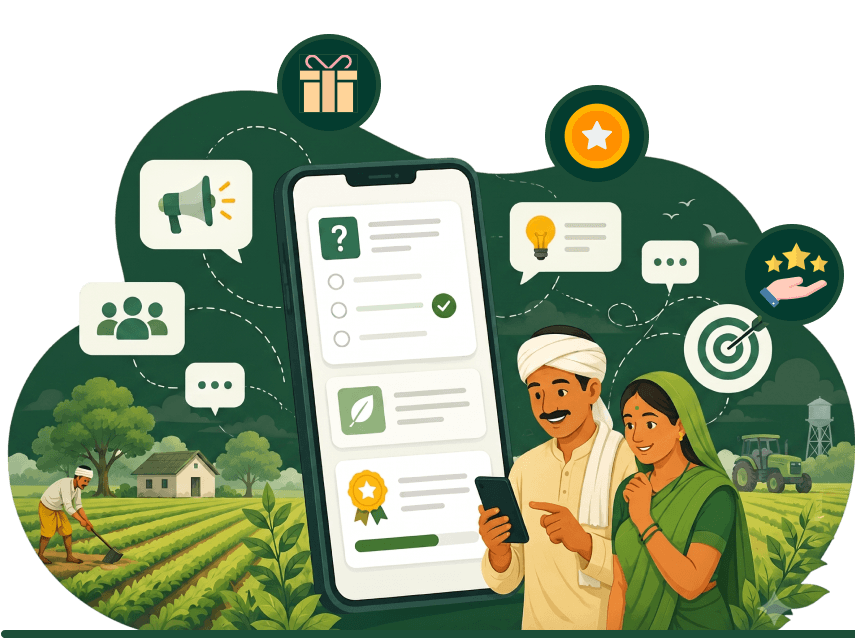
In today's crowded marketplace, every brand is fighting for one thing: attention. Whether it is a social media ad, a WhatsApp forward, a radio jingle, or a banner at the local mandi, consumers are constantly surrounded by marketing messages. The reality is simple: people no longer remember advertisements; they remember experiences.
This shift is especially visible in rural India. Farmers today are more informed, digitally connected, and exposed to multiple brands than ever before.
Traditional advertising alone is no longer enough to build loyalty. Brands need to stay top-of-mind, not just visible. And that is where gamification is changing the game.
Advertising gets noticed. Gamification gets remembered.
Gamification turns engagement into an interactive experience through games, quizzes, rewards, and challenges. It taps into basic human emotions like curiosity, competition, and achievement. When people play, they participate. And when they participate, they remember the brand.
Unlike conventional marketing, gamification does not directly “sell.” Instead, it creates experiences consumers willingly engage with. In rural markets, where trust matters more than flashy campaigns, gamification becomes a powerful bridge between brands and consumers.
How Gamification Helps Brands
01
Builds Stronger Engagement
Games and quizzes keep users involved longer than traditional ads. Instead of passively watching content, consumers actively interact with the brand.
02
Creates Top-of-Mind Recall
Rewards and competitions make brands memorable. Farmers discussing scores or sharing quiz results create organic word-of-mouth marketing.
03
Turns Learning into Interaction
Gamification makes product education simple and engaging. Instead of lengthy explanations, consumers learn through quizzes, challenges, and gameplay, making the brand easier to understand and trust.
One of the strongest examples came when Purple Zone partnered with Mahadhan, a leading fertilizer brand.

The Mahadhan Croptek Campaign
Mahadhan had introduced Croptek, a premium, nutrient-rich fertiliser designed to improve crop performance and deliver higher-quality yields. However, because of the enhanced formulation and higher nutrient value, production costs increased. This resulted in slightly higher prices.
Farmers began questioning the value proposition. Many felt they were paying more and getting less. Slowly, product acceptance was not meeting expectations, “and trust in the brand slowly started decreasing.”
That is when Purple Zone stepped in. Instead of relying on aggressive promotions, the focus shifted toward engagement and education. Purple Zone launched puzzle-based games and farming quizzes where farmers answered questions related to crops, nutrients, and farming practices.
Correct answers helped farmers collect points, while top scorers earned rewards like discounts and merchandise. What started as a marketing campaign soon became a community activity. Farmers were not just interacting with the brand they were competing, learning, and sharing the experience with others.
Farmers stayed hooked on the app, replaying games multiple times to improve scores and unlock more rewards. The campaign witnessed a strong increase users, repeat game plays, Instead of avoiding the conversation around pricing, farmers actively spent time understanding the product and engaging with the brand voluntarily.
The result was simple but powerful
Mahadhan gained more consumer trust and strengthened brand recall. The next big marketing win in rural India will come from interaction, not promotion.
Star Power Decoded : Choosing the Perfect Face for Your Next Campaign
Tune in to the next story to know more!